At A Glance
Project: Flood protection - self-sealing doors and windows using superabsorbents.
Competition scale: 98 submissions, 25 shortlisted after technical review.
Technical reviewer: TÜV Rheinland Consulting GmbH.
Evaluation criteria: novelty, state of the art, feasibility of implementation, environmental compatibility.
Jury included: Lord Mayor of Cologne; Rector of the University of Cologne; senior representatives from DEUTZ AG, the Cologne Chamber of Commerce, the Chamber of Crafts, the Association of German Engineers, Sparkasse KölnBonn, patent practice, and public administration.
Competitive field included inventions from: Siemens Healthcare, Deutsche Telekom, German Aerospace Center, Max Planck Society, RWE Power, DEUTZ AG, University of Cologne, and others.
Follow-on recognition/support: LANXESS AG materials support, Wallburger GmbH prototype involvement, University of Cologne collaboration invitation, Kreisler Selting Werner innovation grant.
In Detail
The Nicolaus August Otto Award for Innovation is the City of Cologne's formal prize for technical invention and applied innovation. Previously known as the Cologne Innovation Prize, it had been awarded every two years since 1998 and was renamed in 2008 after Nicolaus August Otto, the Cologne inventor of the internal combustion engine.
The award recognizes inventions with practical, technical, and commercial potential. Participation was open to inventors with a residence or workplace in Cologne, inventor groups, and employees of Cologne companies, universities, and scientific institutes. Submissions were required to have begun registration as industrial property rights, such as patents or utility models, placing the competition in the field of professional and commercial invention rather than student recognition.
Evaluation and jury
In 2008, the award received a record 98 submissions. TÜV Rheinland Consulting conducted the technical preliminary review, evaluating entries according to novelty, state of the art, feasibility of implementation, and environmental compatibility. The 25 highest-ranked submissions were shortlisted and published in the official City of Cologne award brochure.
Final award decisions were made by a jury chaired by Cologne's Lord Mayor, Fritz Schramma. The jury included senior representatives from the City of Cologne, the University of Cologne, DEUTZ AG, the Cologne Chamber of Commerce, the Cologne Chamber of Crafts, the Association of German Engineers, Sparkasse KölnBonn, patent practice, and public administration.
Competitive field
The 2008 competition placed Günthner's work in the same evaluation framework as inventions from major companies, universities, and research institutions. Shortlisted submissions included work by DEUTZ AG, Deutsche Telekom AG, the German Aerospace Center, the Max Planck Society, Siemens Healthcare Diagnostics, RWE Power AG, the University of Cologne, Cologne University of Applied Sciences, and other professional inventors and companies.
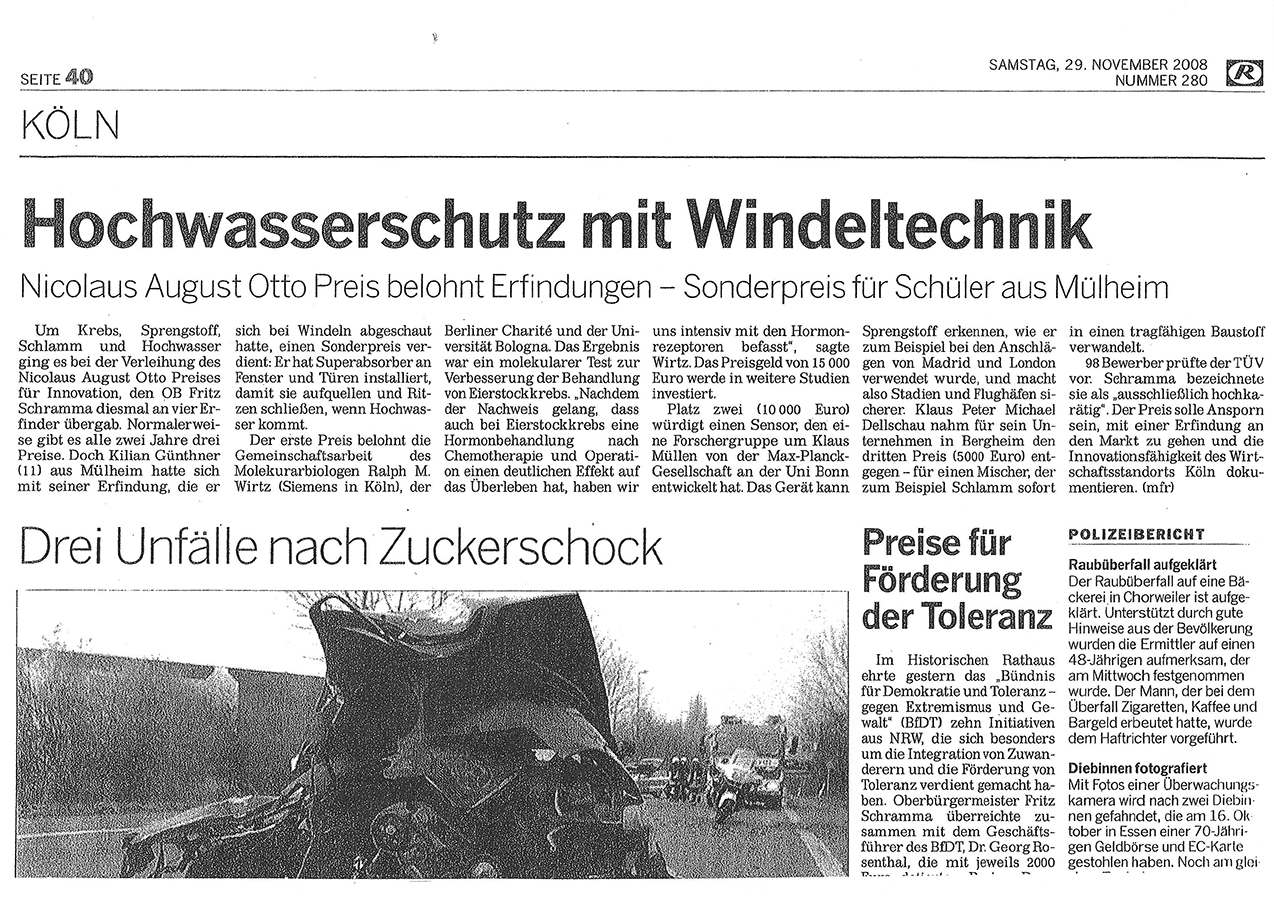
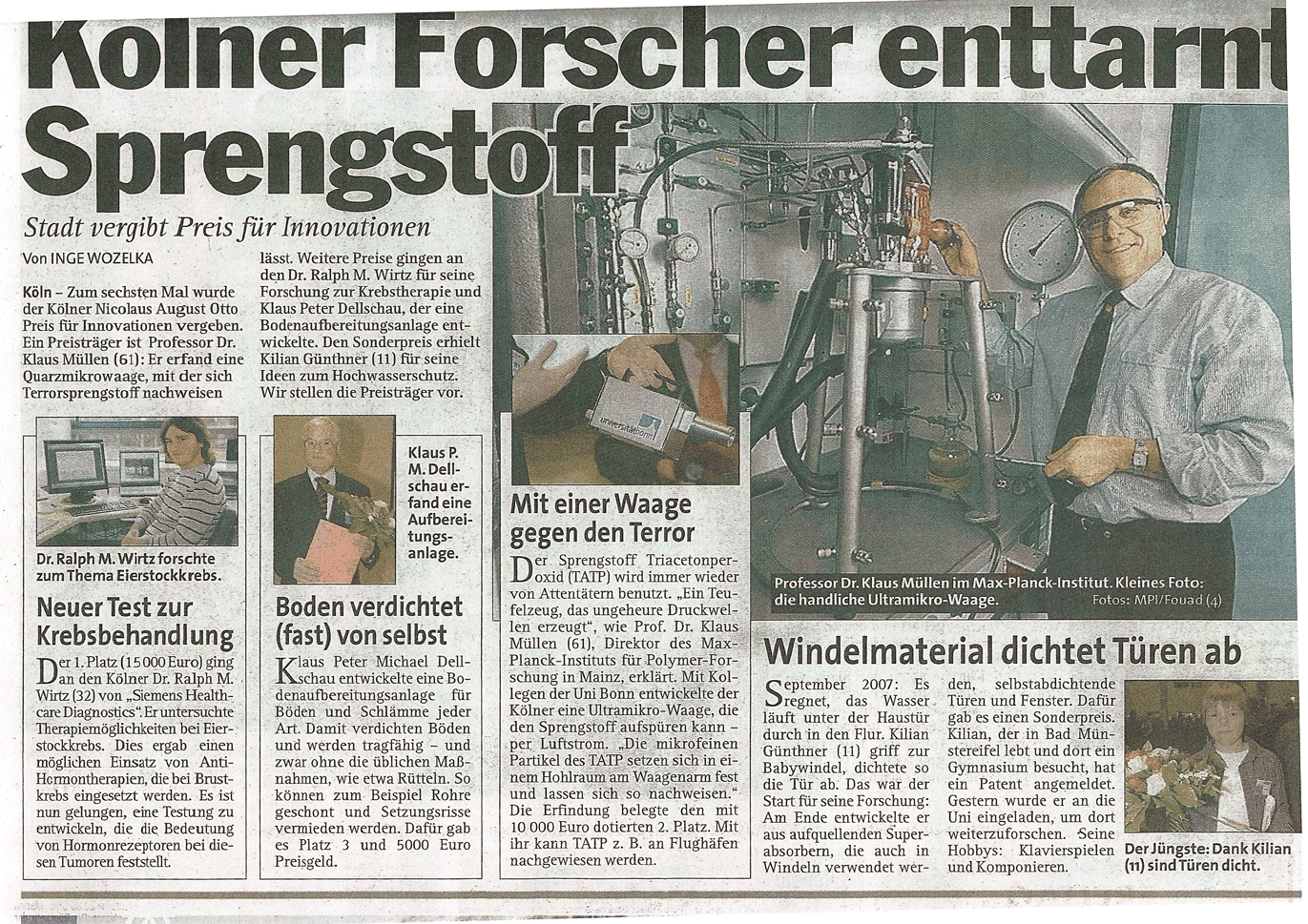
From this field, the jury selected four awardees: first, second, and third prize winners, plus one special prize. Günthner received that special prize for his self-sealing flood protection system.
Recognition
Günthner's awarded invention was a passive flood protection system for doors and windows using superabsorbent polymers. The City of Cologne's award materials described the system as an environmentally friendly, low-cost way to make doors and windows flood-safe with little effort. The key product-design contribution was automatic activation: when floodwater reaches the opening, the material swells and seals the gap, allowing the system to protect a building even when residents are not present.
The recognition was documented not only in the official award brochure, but also in the City of Cologne's 2009 Economic and Labor Market Report and in press coverage of the award ceremony. After the award, the project drew further institutional and industry interest, including materials support from LANXESS AG, prototype involvement from Wallburger GmbH, an invitation from the University of Cologne to continue development with researchers at its Institute of Physical Chemistry, and an innovation grant from the patent law firm Kreisler Selting Werner.
The award recognized Günthner's invention in a professional innovation competition judged against submissions from established companies, research institutions, universities, and independent inventors.